 ccowannarratives@gmail.com


Does Sharing Our Stories Help Us Heal from Loss?
There is a heavy, almost physical weight to a story that remains untold. So, when we experience a profound loss, grief tends to settle in the body. Now, whether it is the passing of a loved one, the end of a career, or a physical impairment, grief is grief, and it is overpowering!
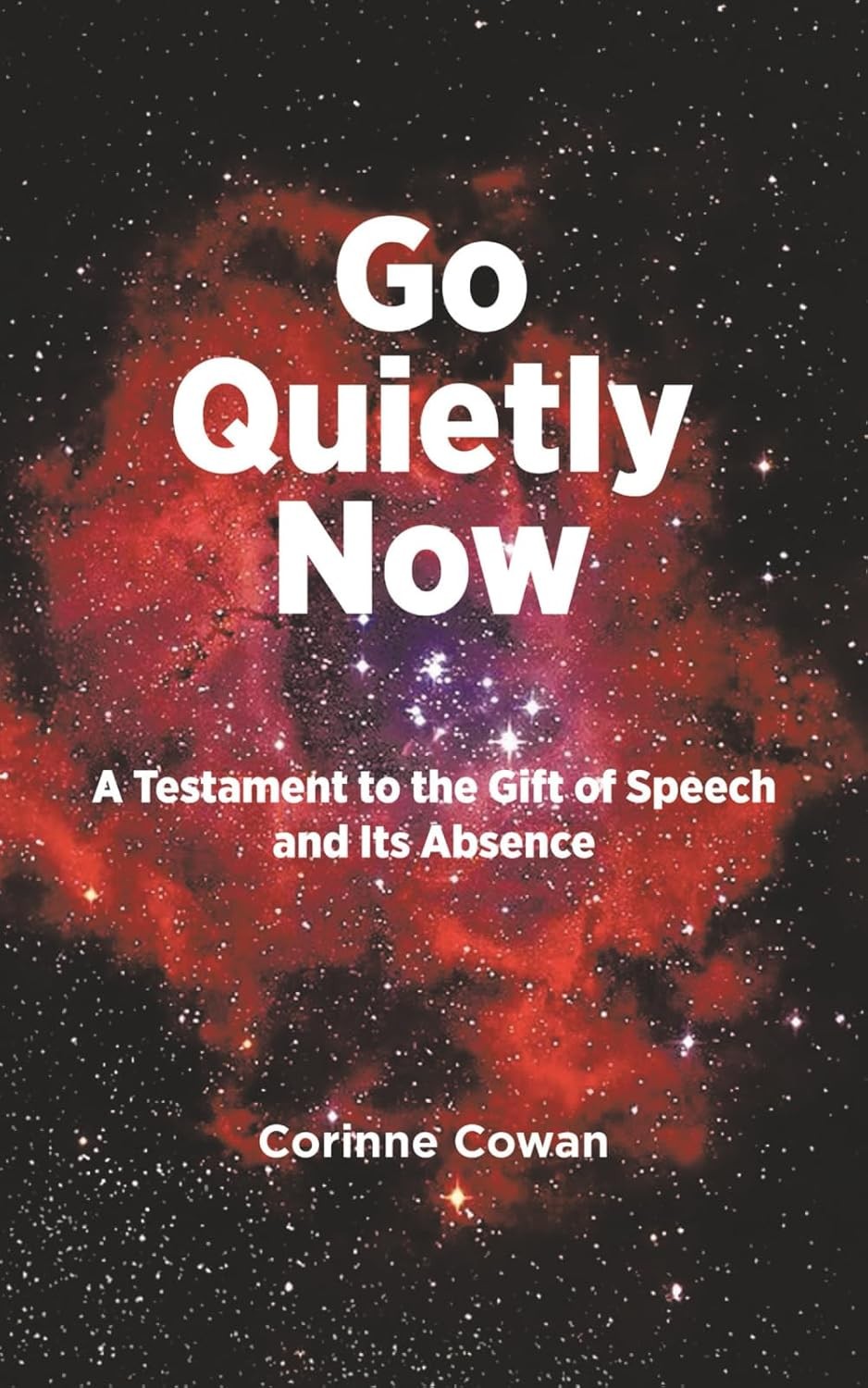
It becomes a silent tenant, occupying space in our minds and muscles. For Corinne Cowan, who was living with vocal cord paralysis for twenty years, this meant that the ‘Gift of Speech’ was stripped away. She was left in a world where her internal narrative had no immediate outlet.
However, as Corinne details in her book, Go Quietly Now, there is a transformative power in the act of externalizing that pain. Moving from the silence of her condition to the world of the written words wasn’t just a creative choice. It was a mechanical necessity for her recovery.
Let’s discuss how this works.
The Science of Expressive Writing & Trauma Recovery
Anyone who wants to understand why writing helps us heal has to look at how the brain processes trauma. So basically, each time something upsetting or traumatic happens, the experience is often stored in the amygdala.
This is the brain segment responsible for emotional intensity and ‘fight or flight’ responses. As scientists put it, these memories are often in parts, sensory-heavy, and chaotic. They are disturbing because they haven’t been processed into a logical story.
Researchers did not give up until they found that labelling these emotions shifts the memory from the emotional center of the brain to the logical center. This means you must put them in the sequence of: How it began? What happened next? How did it end?
Hear It from a Psychologist Yourself
A famous study by Dr. James Pennebaker found that writing expressively about traumatic experiences significantly improves the immune system function and reduces doctor visits.
Pennebaker, who is a social psychologist at the University of Texas at Austin, asked students in the 1980s to write for 15 minutes a day for four consecutive days about the most traumatic experiences of their lives. A control group wrote about trivial, everyday topics.
The results were staggering!
The group showed significantly higher immune system function, lower blood pressure, and fewer visits to the doctor in the following months compared to the control group.
This experiment proved that when you label the suffering and put it into a sequential order, the brain moves the memory from the amygdala to the prefrontal cortex.
But Why Do Memoirs Serve as a Tool for Emotional Release?
If simple journaling is the first aid of emotional release, writing a memoir is the reconstructive surgery. Truth has been spoken! Perhaps this is why authors like Corinne, or famous figures like Joan Didion in The Year of Magical Thinking, choose to share their stories publicly.
Hence, it is fair to say that a memoir is not just a diary. It is an act of ‘Narrative Identity’.
According to psychologist Dan McAdams, our sense of self is a story we tell ourselves. When loss occurs, that story is shattered. You are no longer the professional speaker or the healthy parent. You are someone new, and that new identity feels foreign and broken.
This is why when Corinne wrote her book Go Quietly Now, she was able to:
- Objectify the pain
- Find the logic in the absence
- Create a legacy of resilience
The journey of putting her 20-year struggle into paper must not have been easy. However, once she did it, the paralysis was no longer inside her. It was an object on the page that she could examine, describe, and eventually, put aside.
Besides that, writing allowed her to bridge the old and current versions of herself into one cohesive identity. Now, she is an author with an impressive memoir that will set a legacy for many similarly struggling victims.
Examples of Healing Through Public Narration
Corinne’s journey was surely a huge deal, but she is not the first one to do so. There are plenty of cases where the absence of one thing led to the abundance of another through storytelling.
=> Jean-Dominique Bauby
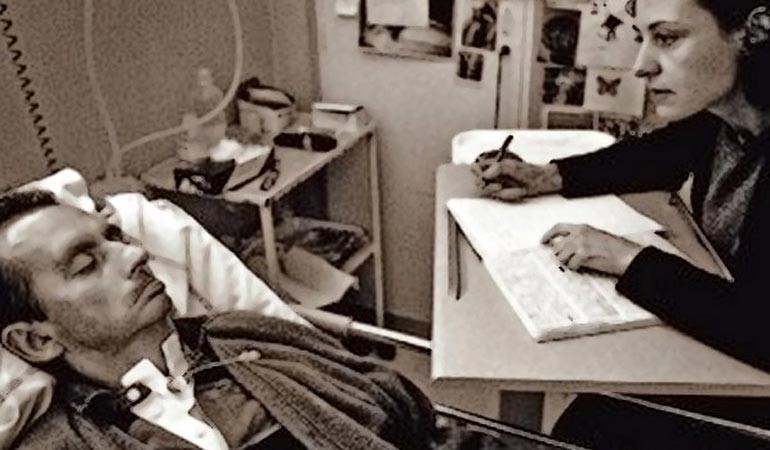
The author of The Diving Bell and the Butterfly suffered a massive stroke that left him with locked-in syndrome. He could only blink his left eyelid, but this didn’t stop him.
Just by blinking to a transcriber, he completed his memoir. Imagine having narration as one’s only remaining form of freedom, and the person uses it to the maximum benefit. Bauby proved that the mind cannot be paralyzed if it is allowed to tell its story.

=> The Veterans Writing Project
This non-profit program uses writing to help veterans process PTSD. Ample research from this project shows that when veterans translate their combat experiences into fiction or essays, their symptoms of hyper-vigilance and anxiety decrease. Thus, clearly, the act of telling the story to an audience helps reintegrate the soldier into the civilian world.
You Must Find a Personal Medium to Tell Your Story
While so many famous people share their stories through words, know that this is not the only medium. You can pretty much do anything you want to express yourself. Also, remember that the goal is not necessarily to become a published author, but to find a vessel that can hold your grief so you don’t have to carry it alone.
1. Visual Arts
There are people who find words too restrictive. For them, art serves as a primary narrative. Moreover, art therapy is also a verified clinical practice used for patients with non-verbal trauma. Hence, when they paint, they can easily express the shape and colour of their loss.
2. Music and Sound
Number two is music, which has the unique ability to bypass the logical brain and speak directly to the nervous system. Whether it is playing an instrument or curated listening, music allows for a somatic release. A way for the body to cope with the feeling of loss until it is settled.
3. Digital and Multimedia
Of course, the modern-day healing from loss can also be done via storytelling on digital platforms. There are numerous forms, you just name it. Blogs, podcasts, and even social media legacy pages. All in all, these platforms provide instant community feedback, which supports healing. After all, knowing that someone else is listening validates the reality of the loss.
How to Start Your Own Healing Narrative
If you are currently processing a loss, the weight can feel impossible to overcome. You might think this is not the right time, but trust us, there won’t be a better moment than this.
So, set a timer and start an expressive form of storytelling in your own style for ten minutes. Yes! Those ten minutes of unfiltered writing, painting, or any of your outlets will be the biggest favour you do to your future self. Just keep going, don’t edit, don’t judge, nothing at all.
Last but not least, here is a reminder for you. Loss is a silent room, but sharing your story is like cracking a window. It lets the light in, and more importantly, it lets the pressure out.